Ace Security Desk – In short: A long-running Senate inquiry into the Triple Zero emergency call crisis has handed down its final report today. The inquiry started as a probe into the failings of Optus after its massive network outage in September 2025, but was expanded as more emergency call failures were revealed: By national consumer affairs reporter Michael Atkin and the Specialist Reporting Team’s Melanie Vujkovic Published: Mon 21 Sep 2026 at 5:05pm
What’s next?
Inquiry chair Sarah Hanson-Young says removing control of the Triple Zero system from Telstra should be at the top of the government’s to-do list.
The inquiry was prompted by last year’s Optus outage, which has been linked to two deaths, and was expanded to cover new problems with other major telcos and mobile devices that have shaken public confidence.
Control of a vital Triple Zero (000) function should be removed from Telstra and nationalised to avoid further crises, a Senate inquiry has recommended.
The report was handed down this afternoon and made 11 recommendations to overhaul the system, including:
- Mandating domestic roaming,
- Introducing minimum performance and reliability standards with automatic compensation for those impacted by outages, and
- Creating the ability for the public to text Triple Zero in an emergency.
The inquiry was chaired by Greens Senator Sarah Hanson-Young, but the report was supported by Coalition and Labor committee members.
“Australian telcos are now on notice. This is the end of the era of self-regulation,”
Senator Hanson-Young said.
“After months of work, this report recommends essential measures the government must enact if they want to end Australia’s telco crisis.”
The committee has called for a new national authority to be created and take over responsibility for the Emergency Call Person operations.
That role is currently performed by Telstra and involves answering calls to Triple Zero and transferring them to local emergency services.
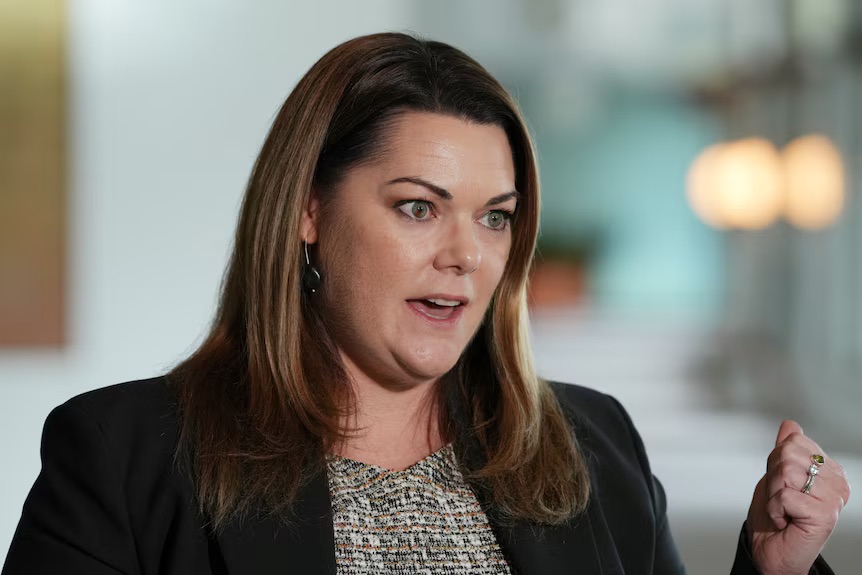
“Triple Zero is an essential service. It is often a matter of life or death for people. We can no longer allow it to be left to private companies,” Senator Hanson-Young said.
In a statement, Telstra said it takes the Senate committee’s report seriously and will carefully consider its findings and recommendations.
“Every day, our people answer more than 32,000 Triple Zero calls, and Telstra has served as Australia’s Emergency Call Person since 1961,”
a Telstra spokesperson said.
Advocates have also pushed for domestic roaming, which would allow customers to access another company’s network if their telco’s service was unavailable.
Roaming allows a phone to automatically jump to the strongest signal available regardless of the user’s primary provider when there are issues with coverage.
However, Telstra previously told the ABC that roaming could cause problems during a major outage by placing “extraordinary demand” on remaining networks.
In its latest statement, the telco said it was open to working with government and stakeholders on service standards, but its position on mandated roaming remained unchanged.
“Our concern is that mandated roaming could reduce infrastructure diversity and resilience over time,” a Telstra spokesperson said.
The ACCC rejected the idea in 2017 after finding it would reduce incentives for telcos to invest in their networks, but the consumer watchdog is now reconsidering it as part of a new inquiry.
The Labor senators on the committee said they supported most of the recommendations, but had reservations about some, including mandating domestic roaming.
They said Australians without access to a carrier’s network could already make Triple Zero calls on others, and it was not necessarily the best means of improving access.
“Labor senators acknowledge that there are serious competition and consumer arguments to be made for and against mandated domestic roaming and note that the ACCC is undertaking an inquiry into the issue,” they wrote.
The committee called to make it possible for people in an emergency to send a text message requesting help, in addition to voice calls. A pilot for that has already been established.
It also recommended an independent review of the telco watchdog, the Australian Communications and Media Authority (ACMA), to ensure its powers, resourcing and regulatory approach are up to scratch for the Triple Zero system.
The regulator should be given the power to compel evidence from telcos during investigations and enforcement, it said.
Labor senators cautioned against reviewing the watchdog until an analysis of the Triple Zero framework and the ACCC’s inquiry were completed.
Restoring confidence in Triple Zero
Since last year’s Optus crisis, the Albanese government has been under pressure to restore confidence in the Triple Zero system.
The Optus outage lasted almost 14 hours, during which 75 per cent of Triple Zero calls failed from a total of 605 attempts.
A spokesperson for the federal government said it had already implemented significant reforms to strengthen the system and would consider the committee’s recommendations.
Penalties for telcos breaking the rules have increased to $30 million, and new outage reporting and public registers have been introduced.
It fast tracked laws to establish the Triple Zero custodian to oversee the system.
The custodian is completing a review into whether existing laws and regulations are adequate, with the report due in March.

The Australian Telecommunications Alliance (ATA), the peak body for the sector, said it had been working to improve the reliability of Triple Zero, including developing new emergency-calling standards, and boosting public awareness of how to access Triple Zero during outages.
“Over the past twelve months, telcos have worked collaboratively on a range of measures to strengthen Triple Zero and better educate customers,” CEO Luke Coleman said.
The Senate committee also recommended compensation be automatic for all customers affected by outages, following concern it was too slow and limited.
Consumers have been forced to prove financial loss instead of the onus automatically falling on the telco, while the limit for non-financial loss of $1,500 when the ombudsman gets involved has been criticised as too low.
The industry ombudsman has published a best practice compensation guide, however it is not legally binding.
Telstra told the ABC it provided almost $1 million in credits to 33,000 customers and businesses that lodged complaints with it following the July outage.
Optus declined to answer how many customers it had compensated and by how much following its September 2025 outage, citing the “confidential nature of customer arrangements”.
Vodafone’s parent company declined to provide figures, while TPG Telecom said it provided credits and compensation based on individual circumstances following its June 18 outage, which was caused by a power failure and did not involve any emergency calls failing.
At Sterling Publishing & Media Service Agency, we prioritise transparency and accountability in all our operations. We wish to clarify that we are not responsible for any external content, hyperlinks, or costs associated with our services. Nevertheless, we remain committed to delivering outstanding services and greatly value your continued support. Thank you for your trust in us.

