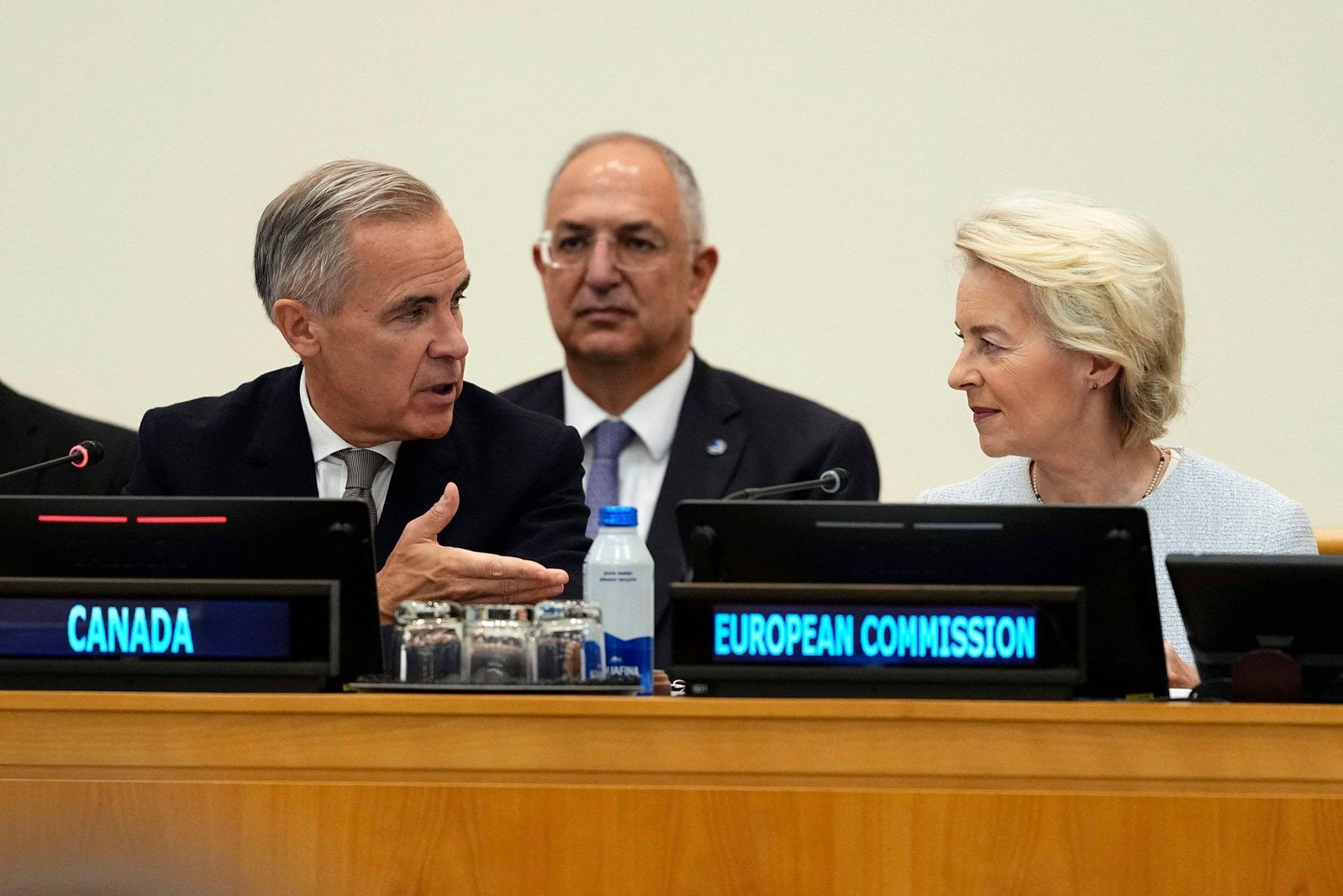
GlobalWarming & ClimateChange News Desk – At the UN General Assembly last week, a raft of countries pledged €211m (£181m) to a new ocean monitoring system that aims to be the “world’s leading provider of ocean intelligence”.
Spotlight: Carbon Brief unpacks how a new EU initiative could support global efforts in weather forecasting, climate prediction and coastal protection.
Canada, Costa Rica, South Korea and the UK were among the nations to commit to funding the EU-led scheme, dubbed OceanEye.
The OceanEye initiative will directly support the Global Ocean Observing System – the world’s largest ocean observing network, which enables scientists, governments and research organisations to develop ocean observation tools and forecasts.
The EU initiative will strengthen ocean observation by helping to maintain existing observation networks, reinforce international cooperation by developing “coordination hubs” and address gaps in under-monitored regions in the southern hemisphere, the Arctic, the deep sea and coastal areas.
At a “high-level pledging event” at the UN meeting, European Commission president Ursula von der Leyen warned that “ocean observation is under huge pressure”, adding that “with OceanEye, we can gather the data we need to understand and protect our ocean”.
In total, 30 countries pledged money and joined the alliance, committing to ongoing cooperation on ocean monitoring. For example, the Guardian reported that the UK Met Office will now share more data with the EU.
The ocean funding was announced as world leaders convened in New York to discuss topics ranging from AI to international security. Climate change was high on the agenda, with speakers including UN secretary general António Guterres addressing the topic.
Virtual ocean
As part of the OceanEye scheme, scientists are also developing a “virtual ocean”, known as the European Digital Twin Ocean project, which pulls together data on key aspects of the ocean – including temperature, ocean currents and pollution – from satellites, sensors, computer models and smartphone apps.
The data will constantly feed into a real-time digital model of the ocean, called a “digital twin”. The resource will be free to use by 2030 and will provide continuous, up-to-date information about the ocean.
Dr Lőrinc Mészáros is a research advisor in marine and coastal systems at Deltares and is leading the organisation’s contribution to the Horizon Europe EDITO-Model Lab – the project that “provides the engine” for the digital twin.
He told Carbon Brief that “digital twins for single objects”, such as a specific area, are “not particularly novel”. However, he said that bringing together the “entire European marine community” to build and operate digital twins that work on a “local to global level” using public resources was “very new”.
Researchers, policymakers and the general public are already using the digital twinto simulate specific aspects of the ocean under a range of different past and future climate scenarios. Mészáros added:
“Together with our partners, we have created a series of applications to produce indicators and maps for habitat suitability in marine protected areas, optimised ship routing to find the least-CO2 emission routes in the Pacific green corridor, oil spill and microplastic hazards.”
Mészáros also pointed to OpenBerg – a model that can be used to give “reliable information on the location and movement of sea ice and icebergs for navigation safety in the Arctic area”.
The push for improved EU-led ocean monitoring and modelling comes as scientists have warned that the global marine monitoring system is at risk, after the US administration under president Trump threatened to dismantle parts of the network.
Mészáros told Carbon Brief that OceanEye “openly positions Europe as the new leader” in ocean observation as the US withdraws
At Sterling Publishing & Media Service Agency, we prioritise transparency and accountability in all our operations. We wish to clarify that we are not responsible for any external content, hyperlinks, or costs associated with our services. Nevertheless, we remain committed to delivering outstanding services and greatly value your continued support. Thank you for your trust in us.

