Ace Business Desk – On Monday evening this week, self-styled home battery boffins were buzzing with excitement on Reddit: By climate reporter Nathan Morris and energy reporter Daniel Mercer Published: Sat 17 Oct 2026 at 5:00am
Deep in niche threads, they shared screenshots and boasted about how much money they’d made that afternoon on the National Energy Market (NEM).
Electricity prices in New South Wales had suddenly skyrocketed around 3:30pm (AEDT), peaking at $23,107 per megawatt hour (MWh), just shy of the market cap. Prices exceeded $5,000/MWh in 11 separate five-minute intervals.
“Rolling power spike pricing, have made $100 in an hour selling 30kw/h,” one Reddit user commented.
“Solid effort!!,” replied another.
A typical household uses between 15 and 20 kilowatt hours of electricity a day.
A spring heat wave was sweeping the state, pushing temperatures into the mid-30s. At Observatory Hill in Sydney, the mercury spiked at 34.7 degrees, more than 12 degrees above the long-term monthly average.
For people with solar panels on their roofs and batteries in their garage, it was a chance to make money selling power back to the grid at much higher rates.
“Hot day shenanigans,” another Reddit user posted under another earnings screenshot.
“Good for us hey!”

Green Energy Markets CEO Tristan Edis said the price spike was a reminder of an underlying NEM vulnerability in a rapidly warming climate as it tried to manage aging coal plants while building generation and storage.
“It’s normal for electricity prices to be high when temperatures go noticeably above 30 degrees,” Edis said.
“What’s problematic is that doesn’t normally happen in October.”
What happened?
Fuelling the extraordinary spike in prices was a confluence of factors.
As temperatures climbed, four of NSW’s 12 coal-fired generating units were out of action and two were at reduced capacity.
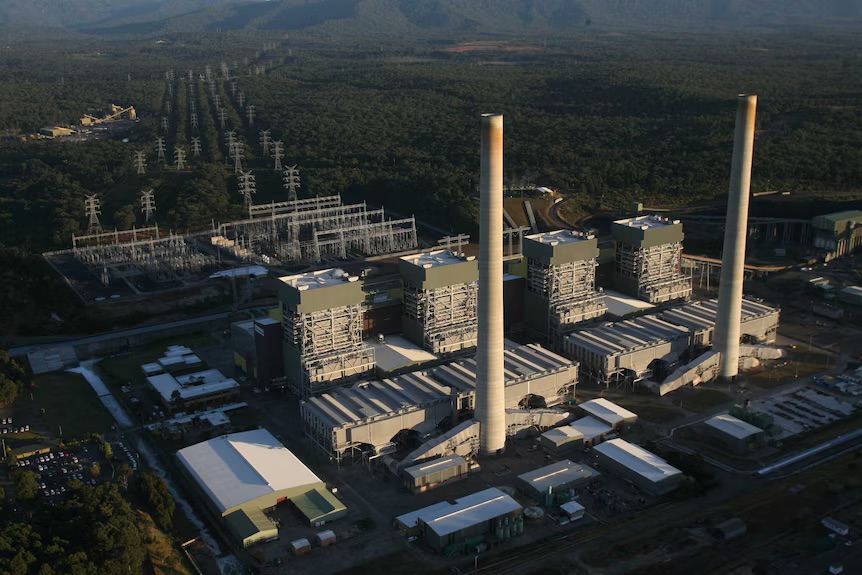
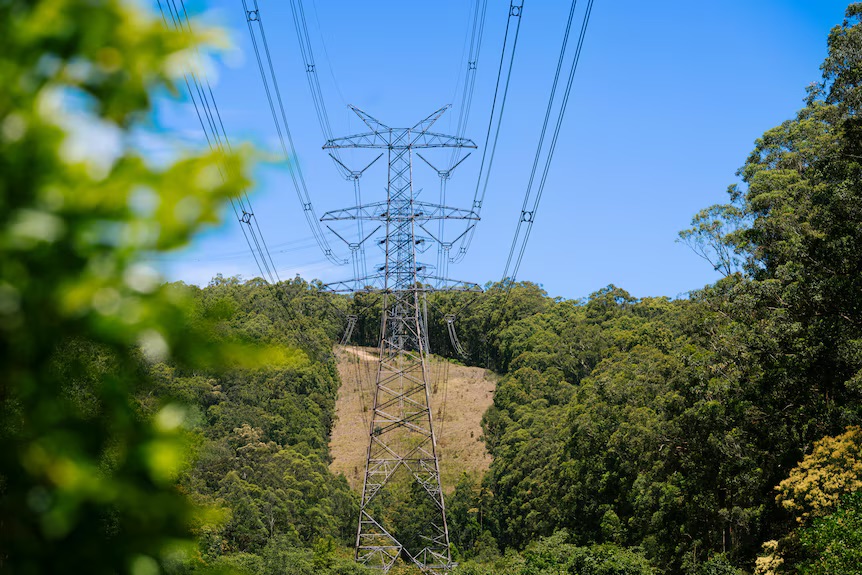
To make matters worse, several high transmission lines were also running below capacity due to maintenance, meaning huge amounts of mostly renewable energy and storage capacity could not be delivered to Sydney just when it needed it most.
Australian energy intelligence firm GridScout said the energy was instead curtailed, or throttled at the source, because the high-voltage network could not transport more electricity.
“Technical curtailment peaked at (2,800 megawatts), with renewables and batteries in Southern NSW being the most heavily affected,” the firm noted on social media.
“This was all while prices were above $10,000/MWh.”
So hot temperatures drove up demand just when less electricity was available.
Amid the chaos, market watchers were also stunned by an unusual phenomenon.
Just after 3pm AEDT, as demand soared, NSW prices on the spot electricity market started whipsawing dramatically.
They jumped from about $200/MWh to more than $1,300/MWh, fell to $766, hit the $23,000 market ceiling minutes later, then plunged again.
And so it went for another hour.
$2m payday for batteries and EVs
Dave Smith, a wholesale power market designer, said the wild price gyrations appeared to have been driven by a new force in energy — Australia’s growing fleet of household batteries.
In the national grid, the Australian Energy Market Operator sets prices every five minutes. It does so choosing the lowest-priced “bids” of whichever generators are offering to meet supply. The price paid is the cost of the highest-priced bid required to meet demand in that five-minute period.
According to Smith, the squeeze in NSW on Monday drew a predictable response from the market. Prices rose sharply as supplies struggled to keep pace with demand.
Among those responding were the legions of household battery owners, who were getting alerts on their phones telling them to sell their surplus power to tap into soaring prices.
But unlike most energy providers, these batteries sit “behind the meter”, meaning the market operator cannot see nor control them.
When prices spiked on Monday, households with batteries sold big amounts of power into the system, only to pull back when prices fell in the next five-minute interval.
At all times, Smith said, AEMO was on the back foot and playing catch-up.
“Everyone sees that, ‘Oh, the spot price is very high’,” Smith explained.
“And some people with home batteries who are seeing that price are saying, ‘Oh, it’s a great opportunity, I can discharge my battery for five minutes’.
“The price [in NSW on Monday] was something like $20 a kilowatt hour ($20,000/MWh). You can make a lot of money.”

Dan Adams, co-CEO of Amber Electric, an online energy retailer that enables battery owners to trade on the NEM, said revenue on Monday was “probably” a record.
“Those 30,000 customers made $2 million in the space of two hours,”
he said.
“So $69 each on average, and the top earners made over $500.”
While $23,000/MWh sounds like a lot to pay for power, Adams said spiking like this is normal and how the market is designed to work.
In the past, he said, only gas-fired generators would have been able to meet such demand peaks, but not anymore.
“Individual households [can too],because their batteries and EVs are providing that capacity to the market,” he said.
“It’s both displacing gas from the grid and shifting value from the big generators into the hands of individual households.”
The hog cycle
Smith likened the seesawing price and demand this week to a “hog cycle”, which refers to the way prices and production swing wildly when they are out of sync.
In most instances, he said, there was a delay between the prices producers saw and the production that followed.
“Whenever you have a lag, you’ve always got this sort of whiplash problem,” he said.
“I mean, if you’re driving along the road and it was 10 seconds before you turned the wheel after you realised you were going in the ditch, you’d very soon be swerving from side to side, right?
“So, whenever there’s a lag, there’s a problem.”
In a statement, an AEMO spokesman confirmed demand rose by almost 2,000 megawatts within an hour during Monday’s heatwave.
“In total, approximately 2,400 [megawatts] of coal-fired generation capacity was unavailable across NSW,” the spokesman said.
Spring has traditionally been when coal plants do scheduled maintenance after winter and before ramping up again for summer demand, but analyst Tristan Edis said that window appeared to be narrower because of global warming.
“If we get more hot days in spring and autumn it gives us very short windows with which to maintain those coal generators,” he said.
Could batteries save us this summer?
After years of wetter, milder seasons, south-eastern Australia is facing a potentially record El Niño, a natural climate phenomenon that can bring hotter, drier conditions.
“Let’s just hope that the coal generators are going to be able to get us through another summer and will be reasonably reliable,” Edis said.
He said Australia had been slow to rebuild its electricity grid.
“We’ve been really living off what was probably unwise excessive investment in power plants and they’re now coming to an end,” Tristan Edis said.
“And we’re doing it too late. Ideally, we should have been building new transmission back in the 2010s.”
But cheap, quick-to-install battery storage is coming online just when Australia needs it.
“Batteries, large and small, are fundamentally changing the way energy is produced, consumed and priced,” AMEO CEO Daniel Westerman told a conference this month.
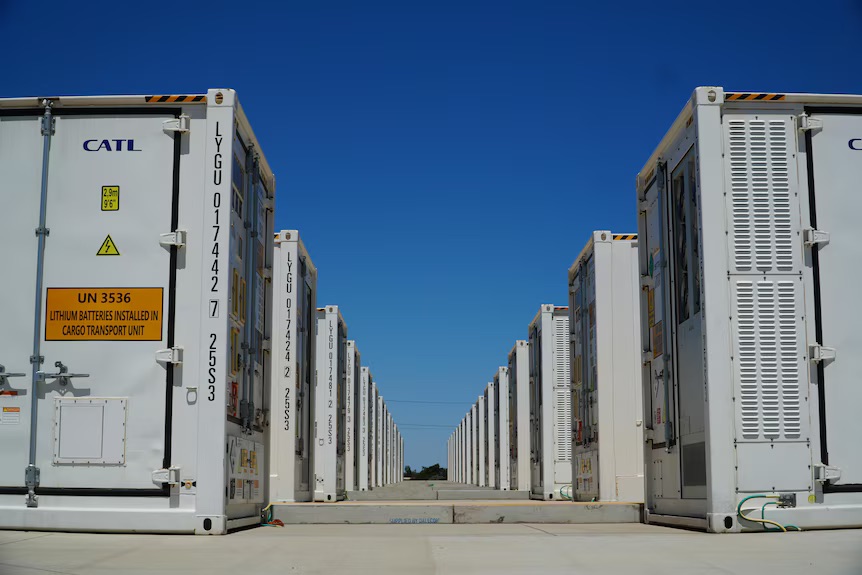
More than 700,000 household batteries have been installed, mostly within the past year, and AEMO estimates more than two million will be installed by 2030.
Grid-scale battery capacity has more than doubled in the past year to more than nine gigawatts and in the third quarter of 2026, Westerman said, batteries set the wholesale electricity price almost 50 per cent of the time, up from 18 per cent in the same quarter last year.
The average wholesale price in the NEM has fallen 44 per cent in the past two years, from $133/MWh in Q2 2024 to $74/MWh in Q2 2026.
However, the analysts all agree that Monday’s price whiplash shows there is work to do to make sure home batteries can be a force for stability in the grid.
Dave Smith said the ability of household batteries to move the market was growing every day as installation numbers rose, but AEMO remained largely blind to their presence and intentions.
“You’re talking about thousands and thousands of small batteries,” he said.
“How do you orchestrate them? How do you make them visible? That’s where the solution lies potentially, but it’s not easy.”
And Tristan Edis says they’re only one part of the solution to rebuilding Australia’s electricity grid.
“They’re no good to us if we can’t feed them with some energy to charge them up,” he said.
“We’ve got heaps of solar and we’re building more of it and that’s great and that’s sort of taken care of … but we also need extra wind and that needs extra transmission and it inevitably takes time.”
At Sterling Publishing & Media Service Agency, we prioritise transparency and accountability in all our operations. We wish to clarify that we are not responsible for any external content, hyperlinks, or costs associated with our services. Nevertheless, we remain committed to delivering outstanding services and greatly value your continued support. Thank you for your trust in us.

