GlobalWarming & ClimateChange News Desk – How El Niño could affect UK weather over the coming months and how the country can prepare for future extremes.
Last weekend, the UK government announced a new flood and drought resilience taskforceto “strengthen the nation’s ability to plan for and respond to extreme weather”.
This year began amid one of the UK’s wettest winters on record. But most of the country is now in drought after months of low rainfall, with “severe drought” even being declared in parts of England this week for the first time in history.
Climate change is already bringing warmer, wetter winters to the UK – increasing winter rainfall by around 7% for every 1C of global warming.
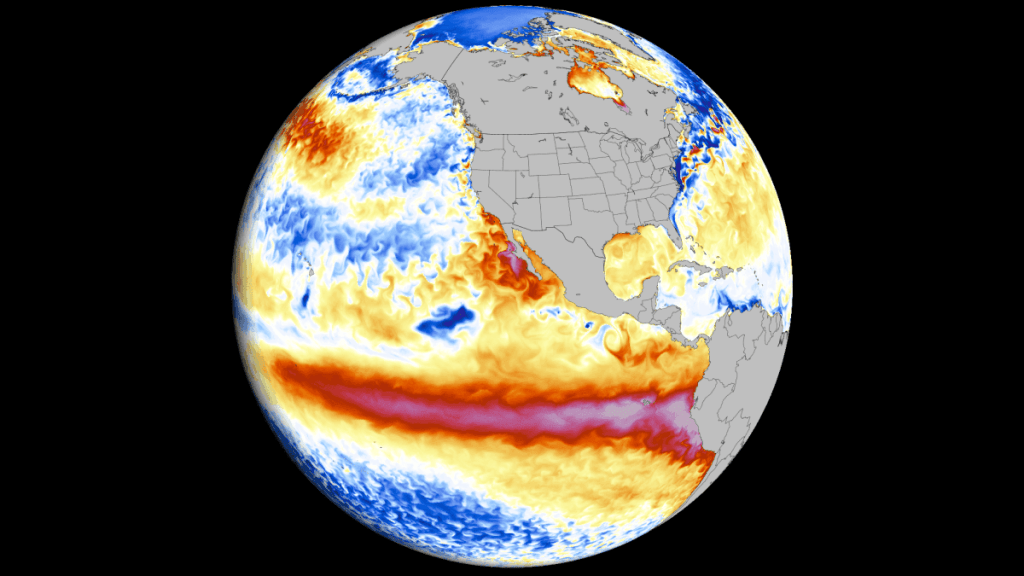
The coming winter will also take place amid an “unprecedented” El Niño event.
El Niño weather impacts
While El Niño is known to have a large impact on weather in many parts of the world, its impacts on the UK are generally “less direct” and “less certain”, according to a government briefing on the phenomenon.
However, the briefing adds that “since this may be the largest El Niño to date it could result in unforeseen effects on UK weather”.
The Met Office’s latest seasonal forecast for the UK indicates an “increased likelihood of wet, windy and potentially stormy conditions later this autumn and into early winter”, noting that this is consistent with past El Niño events.
Prof Hayley Fowler, professor of climate change impacts at Newcastle University, told Carbon Brief that warmer sea temperatures associated with El Niño can lead to wetter weather in the UK:
“There’s this warm temperature pathway in sea surface temperatures, which comes from the Pacific all the way through the tropics and follows the track of south-westerly storms towards the UK…pick[ing] up this extra moisture.”
But El Niño is “only one of several climate drivers affecting the UK’s weather”, according to the Met Office.
For example, the current El Niño is expected to temporarily warm the atmosphere by around 0.2C. This is equivalent to five years of human-caused global warming at recent rates, Fowler told Carbon Brief, adding:
“[El Niño] is kind of a wake-up call for us… We need to be more prepared as a society for these types of events every winter, never mind just this winter.”
Preparing for winter
The Environment Agency estimates 6.3m properties are at risk of flood in England.
While heavier rain – especially when running off dry soil – heightens flood risk, it is hard to project exactly where floods are likely to occur, said Fowler.
However, preparing for “cascading failures” from floods and storms – including disruption to electricity and water supplies, telecommunications and transport – should be a priority for the new government taskforce, she added.
Fowler also stressed the importance of building resilience at the community level. One community she visited in Fintry, Scotland – a village often cut off by floods – set up resilience centres to provide food, shelter, electricity and satellite phones.
She welcomed the expanded remit of the taskforce, suggesting a “joined-up approach” to managing flood and drought could help tackle key problems such as water storage, adding:
“We’ve had this big increase in winter rainfall, but we’re not capturing that extra water, and it’s causing significant floods every year now. Yet, we’ve got problems with a lack of water supply in the summer.”
Such shortfalls could reach 5bn litres a day by 2055, according to the Climate Change Committee, which has called for investment in new reservoirs and other water infrastructure.
At Sterling Publishing & Media Service Agency, we prioritise transparency and accountability in all our operations. We wish to clarify that we are not responsible for any external content, hyperlinks, or costs associated with our services. Nevertheless, we remain committed to delivering outstanding services and greatly value your continued support. Thank you for your trust in us.

