Ace Environment News Desk – Instead of celebrating Thanksgiving, some residents of Middletown, Iowa, are dealing with the aftermath of the detonation of an aging stockpile of lead-based explosives:
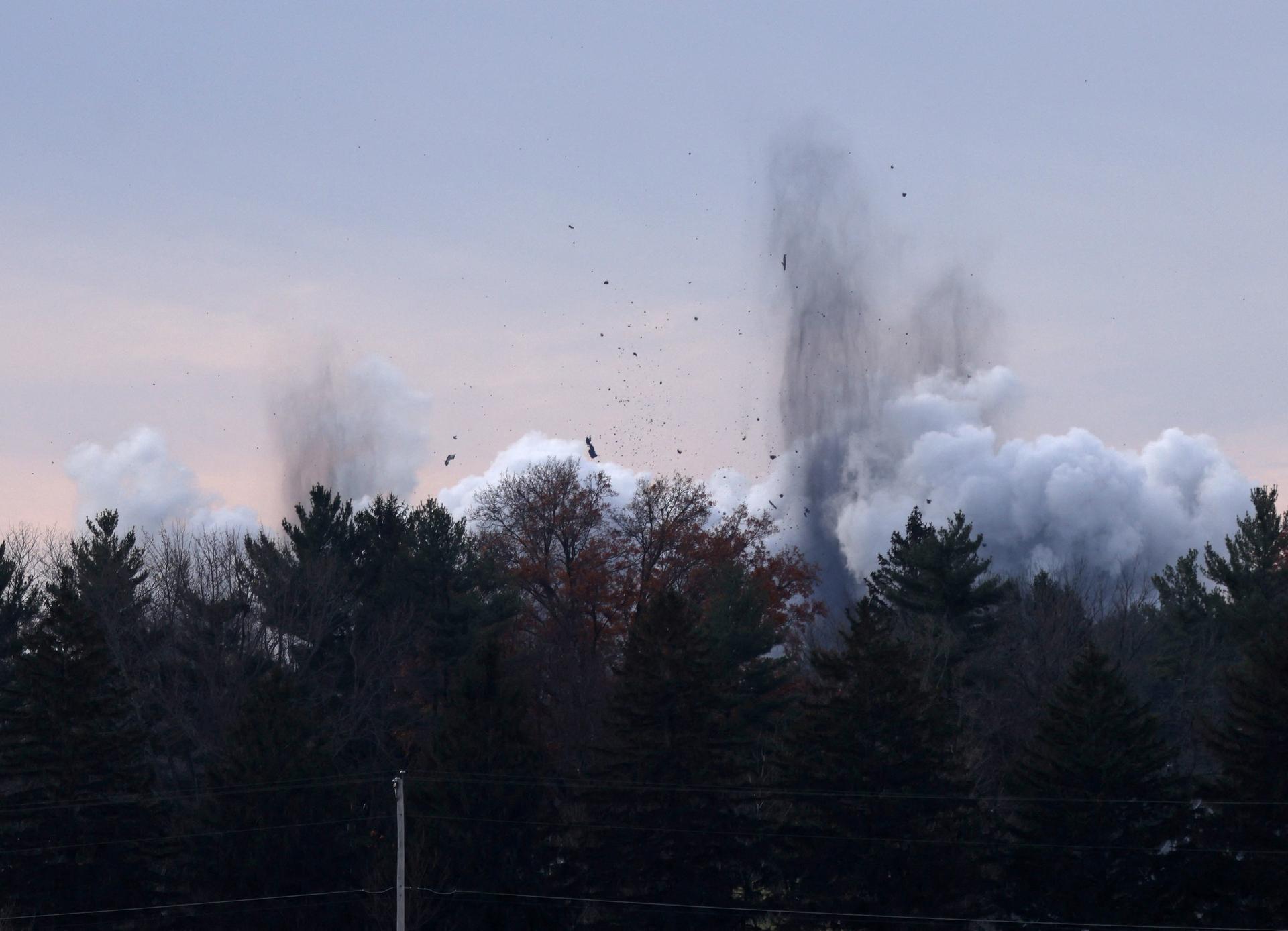
As some residents were evacuated as a precaution, others hunkered down to avoid exposure to any lead dust emitted from the blast
This week, Reuters also reported that the UK recorded its highest number of heat-related deaths, underscoring how extreme heat is affecting people as well as ecosystems. Have heat waves changed the place where you live, work or spend time outdoors By Sharon Kimathi, Energy and ESG Editor, Reuters Digital
What is going on?
After days of public rancor and legal wrangling over its waste disposal plan, the US Army detonated nearly 5 metric tons (4,500 kg) of degraded and highly unstable lead azide stored in 68 deteriorating plastic barrels on Wednesday.
Public safety concerns have focused on the plume of toxic lead dust that the explosions were likely to spew over homes, crops and livestock beyond the detonation site at the Iowa Army Ammunition Plant in Middletown, Iowa, about 150 miles (241 km) southwest of Des Moines, the state capital.
Federal, state and local officials spent Tuesday alerting residents closest to the plant of evacuation plans and bolstering an array of measures designed to curb the fallout, while seeking to reassure the public the operation was well under control.
They also churned out maps forecasting the distance and direction that the plume of toxic emissions was expected to take, based on changing weather conditions, and collected hundreds of air, soil and water samples for comparison with sampling to be done after the fact.
Experts from the Army, the US Environmental Protection Agency, the Bureau of Alcohol, Tobacco, Firearms and Explosives and others stressed their consensus that a “controlled, mitigated detonation” of the stockpile was the safest option for disposing of it.
Otherwise, they said, the increasingly volatile material, growing more unstable with the arrival of colder weather, was certain to eventually explode on its own, posing far greater risks to the surrounding region.
Why is it so dangerous?
Lead azide is an explosive chemical that has long been used as the chief detonating material in military ordnance. After the material was deemed largely obsolete years ago, the Army brought unused stockpiles from bases around the country to the Iowa plant in 2009.
During an inspection in March, officials discovered a crystallization of the storage drums and material in them, a sign that it had become dangerously unstable, spurring deliberations over the safest way to dispose of it.
Lead exposure can cause a range of health problems, particularly in children, in whom it can interfere with cognitive development, according to Patrick O’Shaughnessy, a public health professor at the University of Iowa. Once it settles in the environment, it does not break down, he said.
Farmers and ranchers were worried about protecting their crops and herds. US and Iowa agriculture officials estimated that 350 farms could be impacted by lead fallout, based on the anticipated direction of the plume.
Initial Air Monitoring Shows Zero Detection of Airborne Lead Following Controlled Detonation at Iowa Army Ammunition Plant: EPA.GOV/NEWSROOM: Published: November 25, 2026
The Environmental Protection Agency said one hour after the blast that “real-time air monitors are reporting zero detection of airborne lead throughout the region” and that it would continue taking air, soil and water samples throughout the day to compare with samples collected the day before the blast.
EPA Administrator Lee Zeldin issued the following statement:
“Over the course of the upcoming minutes, hours, and days, EPA’s 300 employees and contractors, who have been pre-positioned on the ground, will be conducting extensive and thorough monitoring, taking samples of air, land, and water, and deploying remediation efforts if necessary. In anticipation of the Army’s controlled detonation this morning, EPA placed the full force of the agency behind our effort to ensure we are doing everything possible to protect human health and the environment. This included the collection of 1,200 samples of air, land, dust, and water prior to this morning’s controlled detonation. We stand ready to provide any and all necessary support.”
Data can be viewed as it becomes available here.
Residents in the area expressed relief mixed with skepticism about the government’s candor about emissions from the exploded chemicals.
At Sterling Publishing & Media Service Agency, we prioritise transparency and accountability in all our operations. We wish to clarify that we are not responsible for any external content, hyperlinks, or costs associated with our services. Nevertheless, we remain committed to delivering outstanding services and greatly value your continued support. Thank you for your trust in us.

