Ace Security Desk – Britain’s free speech environment is already under intense pressure. Now a proposal would make social media itself a licensed activity, with Ofcom deciding who gets to operate.
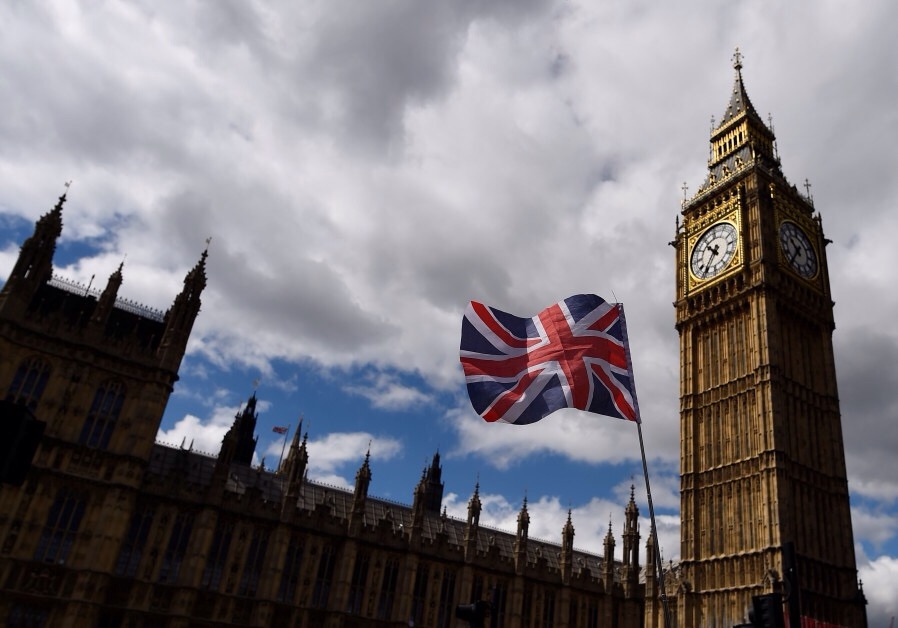
In the UK, The Social Media Platforms (Ofcom Licensing) Bill had its first reading in the House of Lords on September 7. A first reading means the bill was presented, but not debated or voted on, and is not yet law. It is, however, a formality, and the text is now out there.
It’s not even a Labour government bill, which one might have expected, but one put forth by a member of the House of Lords, a life peer from the Liberal Democrats, Baroness Benjamin.
If it becomes law, the bill would make it an offense to run a social media platform available to users in the UK without a license issued by the country’s communications regulator, Ofcom.
What would qualify as a platform that requires a license is defined in the proposal as one that “(a) has the sole or significant purpose of enabling users to create, share, discover or consume user-generated content, and (b) enables users to discover, interact with or follow the content or accounts of users other than those with whom they communicate privately.”
The license would be issued for a fixed term, of up to ten years, and would have to be renewed before it expires. To obtain it, companies would have to apply in writing, while Ofcom would have to “have regard to” a number of things, including duties that would be imposed on licensees, compliance requirements, and any other matters it considers relevant.
The license could be granted with conditions that Ofcom “considers necessary.”
The duties include:
“Content made available on its social media platform complies with the laws of the United Kingdom is not materially harmful to users or to the public interest does not incite criminal conduct, violence, hatred or public disorder. Systems are in place to minimise the dissemination of materially false or misleading information. Harmful content identified by Ofcom is removed, restricted or otherwise addressed within such period as Ofcom may specify.”
Companies would also have to have in place appropriate staff, trained to carry out their duties; systems to remove or restrict content, and procedures to comply with Ofcom’s directions. They would also have to keep records proving their compliance and produce them to Ofcom on request.
Another requirement is that platforms would have to provide information about the identity and authenticity of publishers.
Ofcom would be able to enforce its decisions by issuing a warning notice, requiring remedial action, suspending or revoking the license. In the case of revocation, Ofcom could go to court to get an order making ISPs block the service in the UK, as well as any other enforcement measures the court considers appropriate.
The penalty for operating without a license would be imprisonment of up to two years and/or a fine. The bill sets the fine at “the statutory maximum” – which is “unlimited” according to the Sentencing Council.
It doesn’t take a huge amount of cynicism to suspect that the ultimate goal is to move to a license-based regime, where the authorities don’t even have to prove a breach of rules, they just have to refuse to issue or renew a license.
With the Online Safety Act, Ofcom acts after the fact, and has to prove a breach. The maximum fine is £18 million or 10 percent of worldwide turnover.
But in July this year, Ofcom announced it was shutting down a case it had brought against an American forum discussing suicide, which had been fined £950,000. The reason? “All possible legal routes under the Act have now been exhausted.” In the same announcement, Ofcom asked the government to “consider areas for strengthening enforcement powers” – and “business disruption measures” such as court orders making ISPs block a site at the national level. It also complained that it cannot get a blocking order “for failure to pay a fine alone” – and that the Online Safety Act “does not provide a mechanism” for a pre-emptive one.
But a license-based system would give Ofcom all that, and more. There would be no need to prove a breach, or collect a fine – the permission to operate would simply be withdrawn. And who decides what is “materially harmful” or “the public interest” or “materially false or misleading information”? The same body that issues and withdraws the license…Ofcom.
And who decides what Ofcom should decide? Well, that’s not something the bill goes into.
As for Baroness Benjamin, she has in the past asked the government whether on-device tech could be used to scan phones to identify and block “hate speech,” as well as age verification, and a host of other privacy-invasive measures.
At Sterling Publishing & Media Service Agency, we prioritise transparency and accountability in all our operations. We wish to clarify that we are not responsible for any external content, hyperlinks, or costs associated with our services. Nevertheless, we remain committed to delivering outstanding services and greatly value your continued support. Thank you for your trust in us.

